A time appears only when two separate things allow it, and knowing which one refused explains almost every "why can I not book that?".
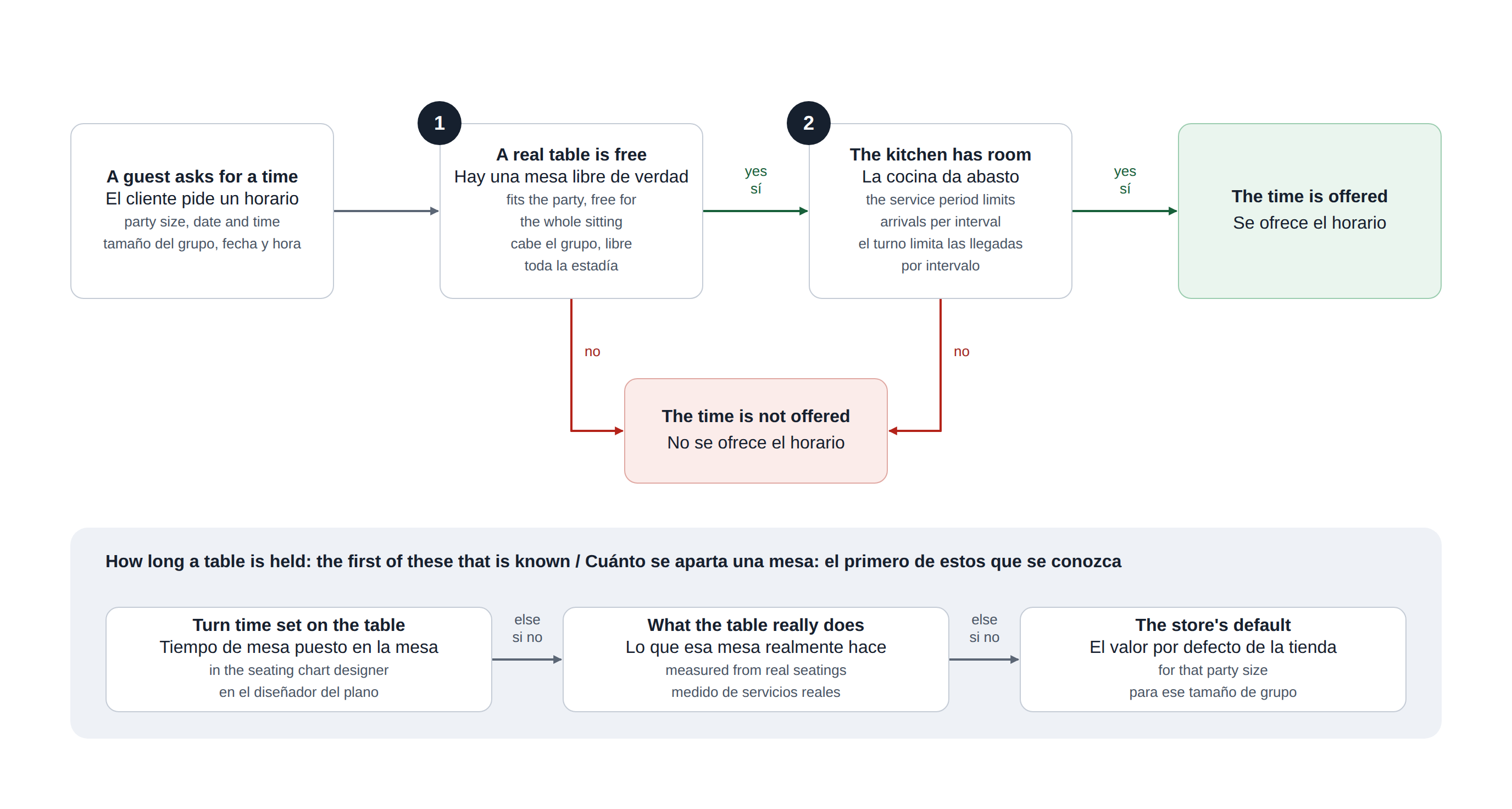
In one picture: the two checks a time has to pass, and how the length of a sitting is decided.
1. A real table has to be free
Availability is worked out against the actual tables in the seating chart, not an abstract count of seats. The party has to fit the table’s minimum and maximum, and the table has to be free for the whole sitting — not just at the start of it. Where no single table fits, tables in the same section can be put together.
2. The kitchen has to have room
On top of that, a service period can cap how many guests or parties may arrive in the same interval. Ten free tables at eight o’clock is not the same as a kitchen that can send ten tables at eight o’clock.
How long a table is held
The sitting length comes from the first of these that is known:
- the turn time set on that table in the seating chart designer;
- what that table has actually done, measured from real seatings;
- the store’s default for that party size.
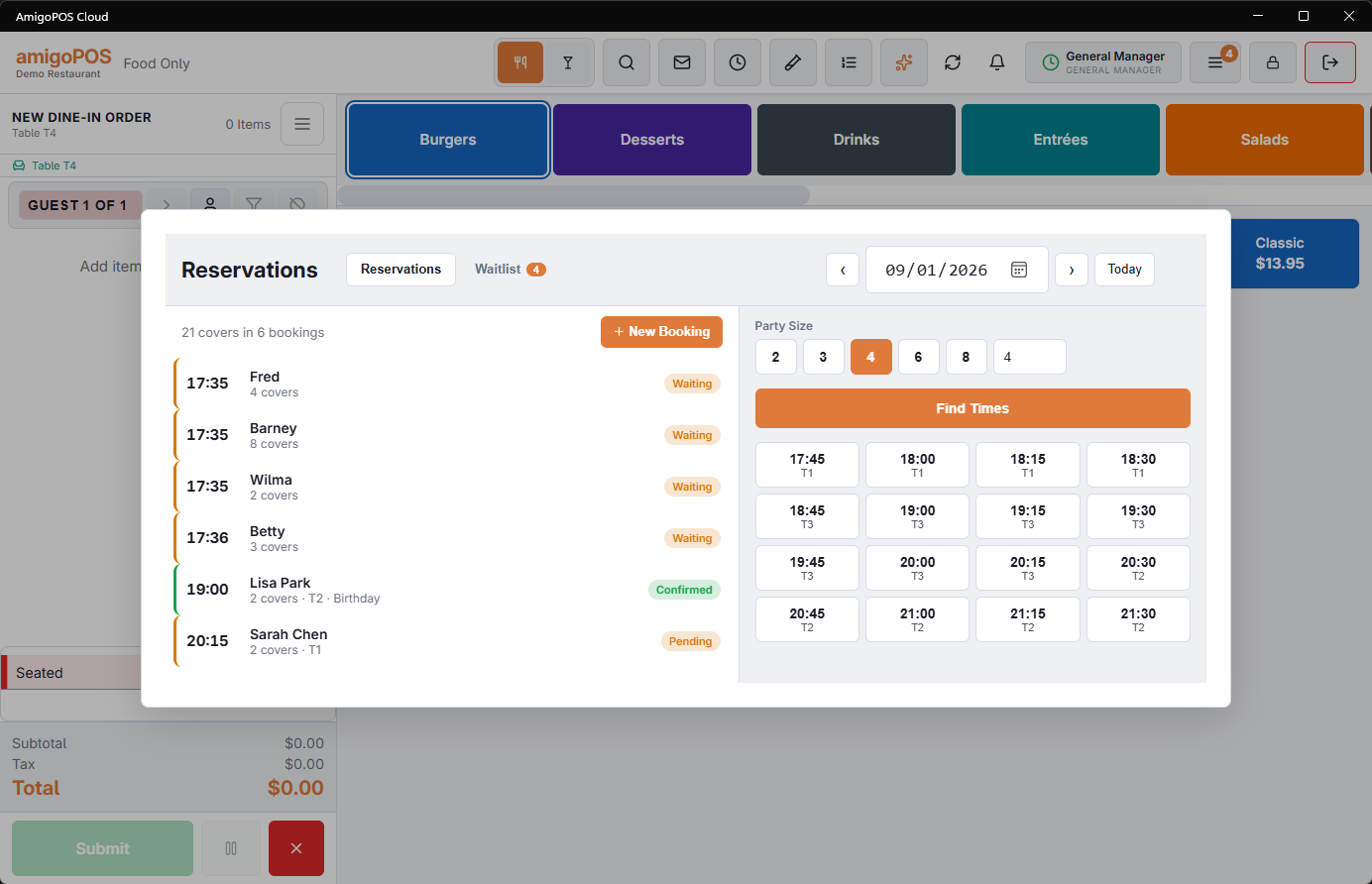
When the guest chose the table
A guest who picked a table on the booking page holds that table and no other: the book does not substitute a different one if it is taken in the meantime, it asks the guest to pick again. The pacing rule above still applies before any table is offered.