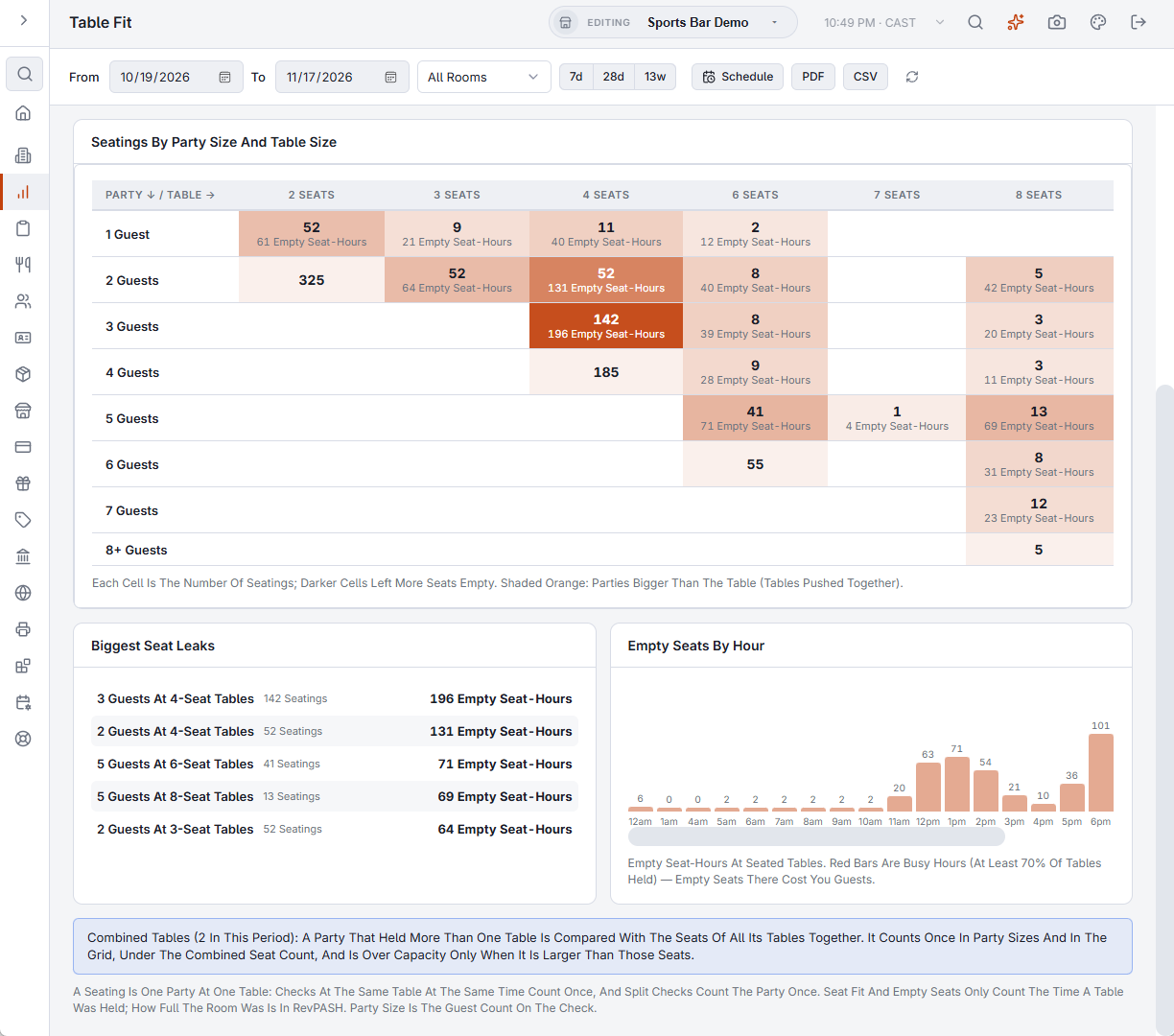
Back Office › Analytics › Performance › Table Fit compares party sizes with table sizes. A couple at a six-top leaves four seats empty for the whole meal; the page shows how often that happens, which party and table sizes cause it, and whether your room has the tables your guests actually need. It opens on the last 28 business days, ending yesterday.
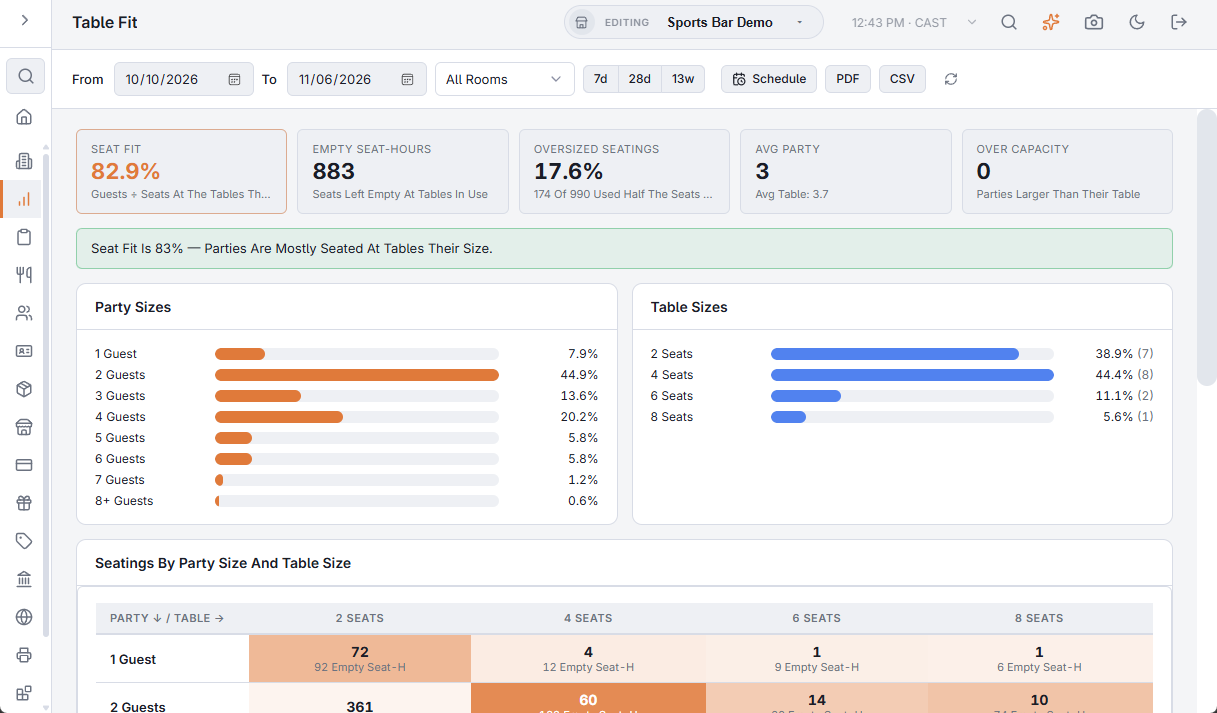
The toolbar
- From / To — the business days to include. 7d, 28d and 13w set a range ending yesterday in one tap.
- Room picker — shown when your seating chart has more than one room; pick one to see only its tables, or All Rooms.
- Schedule — emails the report on a schedule, for the room you picked. See Emailing the performance reports on a schedule.
- PDF — preview, download or email the report. CSV downloads the summary, the party size × table size grid, the party and table mix and the hours. Both are greyed out when the range has no seatings. The file’s section titles, column headings, day names and Yes/No values are in the language the Back Office is shown in; numbers use a dot for decimals with no thousands separator, and dates are written year-month-day, so a spreadsheet reads them the same in any language.
- The refresh button loads the figures again.
The numbers at the top
- Seat Fit — guests ÷ seats at the tables they held, over the time they held them. 100% means every seated table was full.
- Empty Seat-Hours — seats left empty at tables in use, in hours.
- Oversized Seatings — the share of seatings whose party used half the table’s seats or fewer, with the count.
- Avg Party — next to the average table size.
- Over Capacity — parties bigger than their table (tables pushed together).
From 20 seatings, a note under the numbers can read the result for you: that most of your parties are one or two guests but few of your tables seat two, that many tables seat five or more but few parties are that big, or, in green, that seat fit is 75% or better.
Party sizes and table sizes
Party Sizes and Table Sizes side by side compare the share of seatings by party size with the share of tables by size (with the number of tables). If 60% of parties are couples and 15% of tables are two-tops, couples are filling your four-tops.
The matrix
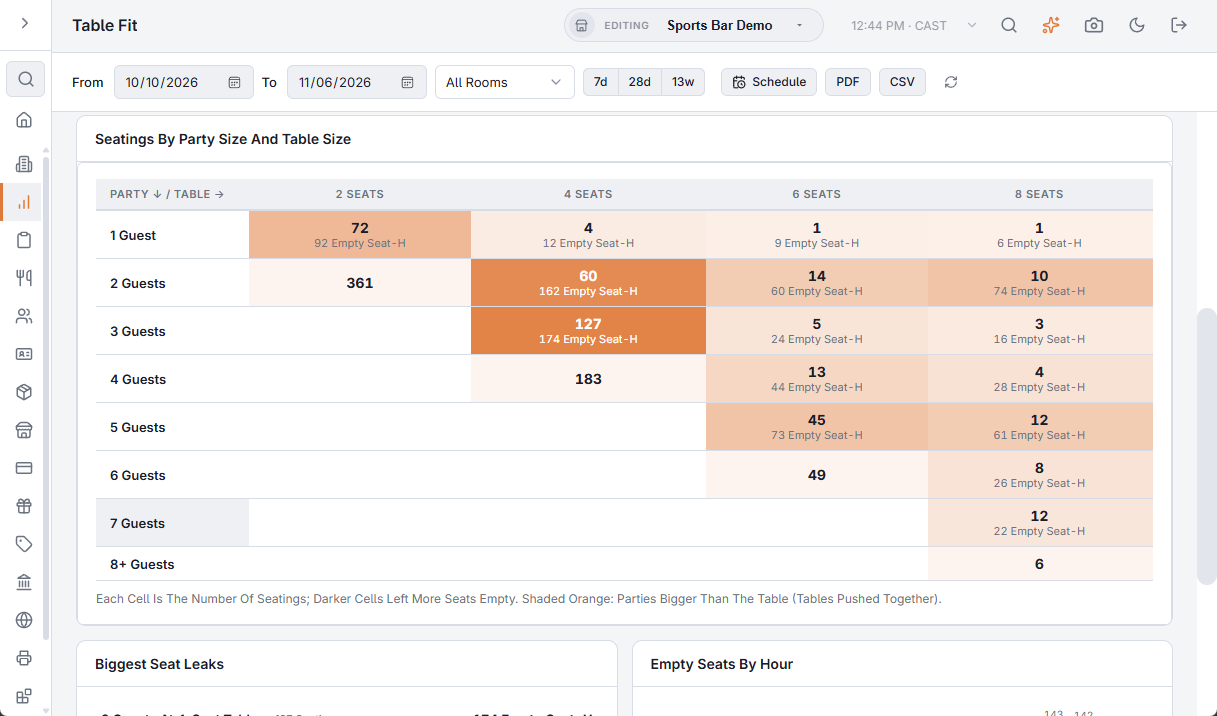
In Seatings By Party Size And Table Size, each row is a party size (up to 8+ Guests) and each column a table size; each cell is the number of seatings, with the empty seat-hours they left. The darker the cell, the more seats it left empty. Orange cells are parties bigger than the table. Hover a cell for its seatings, hours held, empty seats and sales.
Biggest seat leaks and empty seats by hour
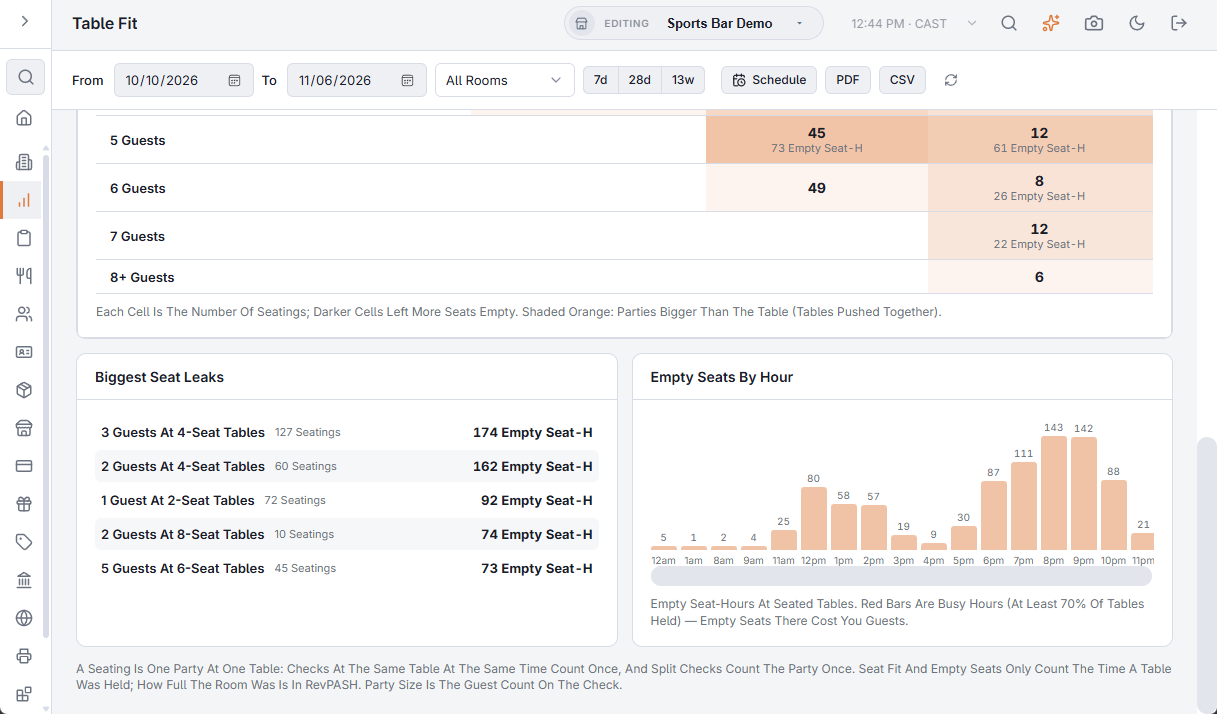
Biggest Seat Leaks lists the five party/table pairs that left the most seats empty. Empty Seats By Hour shows when: red bars are busy hours, when at least 70% of tables were held — empty seats then cost you guests who are waiting. Empty seats at a quiet 3 pm cost nothing. Hover a bar for its empty seat-hours and the share of tables held.
What to do about it
- Split some four-tops into two-tops (or use tables that pull apart) when couples dominate the busy hours.
- Ask hosts to seat small parties at small tables first at peak times, and keep big tables for big parties.
- Set Min Guests on big tables in the seating chart so reservations don’t put a couple there.
Combined tables
A party that held more than one table on the register is compared with the seats of all its tables together. It counts once in Party Sizes and once in the grid, under the combined seat count, so the grid gains a column such as 10 Seats. Such a party is Over Capacity only when it has more guests than those seats; a party bigger than its table that was not combined on the register still counts there. When the period has any, a Combined Tables note above the footnote gives their number. See Combining tables for a large party.